

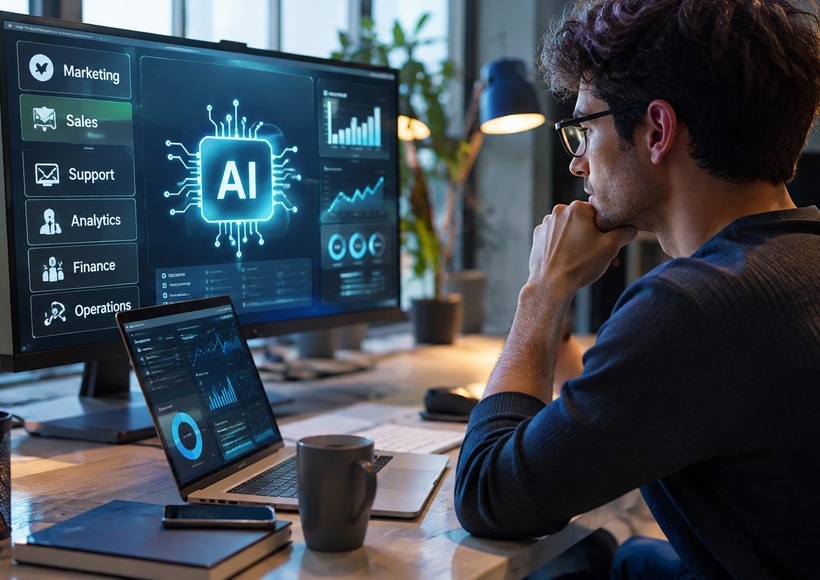
By 2042, entrepreneurship may change beyond recognition. Artificial intelligence will likely evolve from a mere tool for performing specific tasks into a full-fledged digital team capable of independently managing many business processes.
Imagine a company of the future that has no large office or dozens of employees. It is owned by a single person, while intelligent systems handle the core work. One AI agent manages finances and analyzes income and expenses. Another handles advertising, creates marketing strategies, and studies consumer behavior. A third processes orders, communicates with clients, and oversees the fulfillment of their requests.
Such digital assistants will be able to interact with one another, exchange information, and distribute tasks. The entrepreneur’s role will be to define the development strategy, approve key decisions, and monitor results.
This model could prove particularly promising for online stores , consulting firms, marketing agencies, educational projects, and digital services. Starting a business could become significantly more accessible: creating a company of the future will not necessarily require substantial initial capital or a large workforce.
The competitive landscape will also change. Small businesses will be able to enter international markets, serve customers from various countries, and operate around the clock thanks to automated systems. At the same time, the speed of decision-making and the quality of AI implementation will become key business advantages.
However, the emergence of fully autonomous companies will not be without challenges. Artificial intelligence can make mistakes, encounter unusual situations, and make decisions that require human judgment. Issues regarding security, privacy, accountability, and control will also remain relevant.
What will the entrepreneur of the future be like?
By 2042, the role of a business owner could change significantly. Instead of managing a large workforce, they will coordinate the work of digital employees, develop ideas, identify new markets, and determine the company's direction.
Conclusion
By 2042, starting a business may well become more accessible than ever before. A single individual will be able to manage processes that currently require an entire team of specialists. Artificial intelligence will not eliminate entrepreneurship but will instead reshape its rules. The key advantage of the future will be the ability to turn ideas into viable projects by leveraging the power of intelligent technologies.